


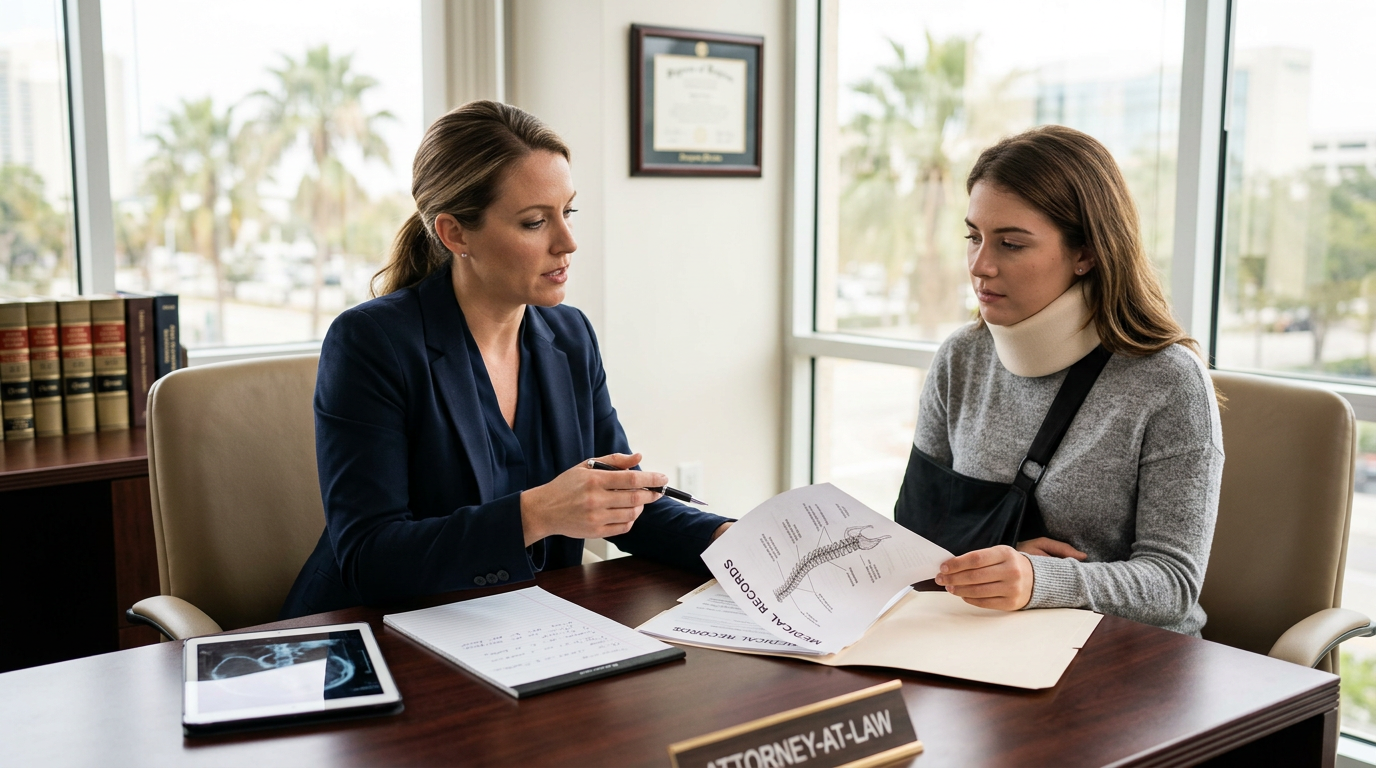
Florida’s “no-fault” insurance system is designed to provide immediate medical coverage regardless of who caused an accident. However, this system also places significant restrictions on an accident victim’s ability to seek full compensation. To step outside the no-fault system and sue a negligent driver for non-economic damages—such as pain and suffering, mental anguish, or loss of enjoyment of life—you must first meet the serious injury threshold in Florida.
Understanding this threshold is critical for anyone involved in a motor vehicle collision. Without a qualifying “permanent” injury, your recovery may be limited solely to your Personal Injury Protection (PIP) benefits, which often fall far short of covering the true human cost of an accident.
Florida’s No-Fault Law and the Tort Threshold
Under Florida Statutes § 627.737, every driver is required to carry PIP insurance. This insurance pays for 80% of medical bills and 60% of lost wages up to $10,000. In exchange for this guaranteed coverage, the law grants “immunity” to the at-fault driver from being sued for non-economic damages, unless the victim’s injuries reach a specific level of severity.
This legal barrier is what we call the serious injury threshold. If your injuries do not meet this legal standard, you are generally prohibited from recovering money for the physical pain and emotional distress caused by the crash.
What Qualifies as a “Serious Injury”?
Florida law defines the serious injury threshold through four specific categories. To successfully pursue a claim for pain and suffering, a plaintiff must prove that their injury consists, in whole or in part, of:
1. Significant and permanent loss of an important bodily function.
2. Permanent injury within a reasonable degree of medical probability, other than scarring or disfigurement.
3. Significant and permanent scarring or disfigurement.
4. Death.
While death and significant scarring are often visually evident, the most commonly litigated category is “permanent injury within a reasonable degree of medical probability.” This often involves soft tissue injuries, spinal damage (such as herniated discs), or traumatic brain injuries that do not necessarily “heal” to their pre-accident state.
Proving Permanency: The Role of Medical Evidence
Meeting the serious injury threshold in Florida is not a matter of personal opinion; it is a matter of medical evidence. Insurance companies frequently argue that a victim’s injuries are temporary or pre-existing to avoid paying out non-economic damages.
To overcome these defenses, you must have a qualified medical professional—typically a treating physician or an expert witness—testify that your injury is permanent. This is established through:
- Diagnostic Imaging: MRI scans, CT scans, and X-rays that show objective physical damage.
- Treatment History: Documentation showing that despite consistent medical care (physical therapy, injections, etc.), the patient has reached Maximum Medical Improvement (MMI) but still suffers from functional limitations.
- Functional Capacity Evaluations: Tests that measure your physical limitations in daily life.
As experienced Naples civil litigation attorneys, we understand how to present this evidence to ensure the court and the insurance company recognize the true extent of your losses.
Why the Threshold Matters for Your Case Value
The serious injury threshold is often the “make or break” point in a personal injury settlement or trial. If a jury finds that you have not met the threshold, they are instructed by the judge that they cannot award you any money for pain and suffering. This can result in a verdict that only covers your remaining out-of-pocket medical expenses, which may be negligible if PIP has already paid them.
Conversely, once the threshold is met, the “floodgates” open for full compensation. This includes not only past and future pain and suffering but also the impact the injury has on your relationships and your ability to lead a normal life.
How Legal Counsel Protects Your Rights
The legal and medical complexities of Florida’s insurance laws require an authoritative approach. At Weldon & Rothman, PL, we focus on building a comprehensive medical record from the earliest stages of your case. By working closely with medical experts, we ensure that the long-term impact of your injuries is documented with the precision required by Florida law.
Whether you are dealing with a complex car accident or seeking guidance from personal injury and employment law experts, understanding your rights is the first step toward recovery.
Conclusion
The serious injury threshold in Florida serves as a significant hurdle, but it is one that can be cleared with the right medical evidence and legal strategy. If you have been injured, do not assume your case is limited to a small PIP payout. A thorough evaluation of your medical condition may reveal that you are entitled to much more. For a deeper look at how we handle these complex matters, you can learn more about Richard L. Weldon, II and our firm’s commitment to Southwest Florida victims.